

Symphonies of Yield in the Theater of Credit
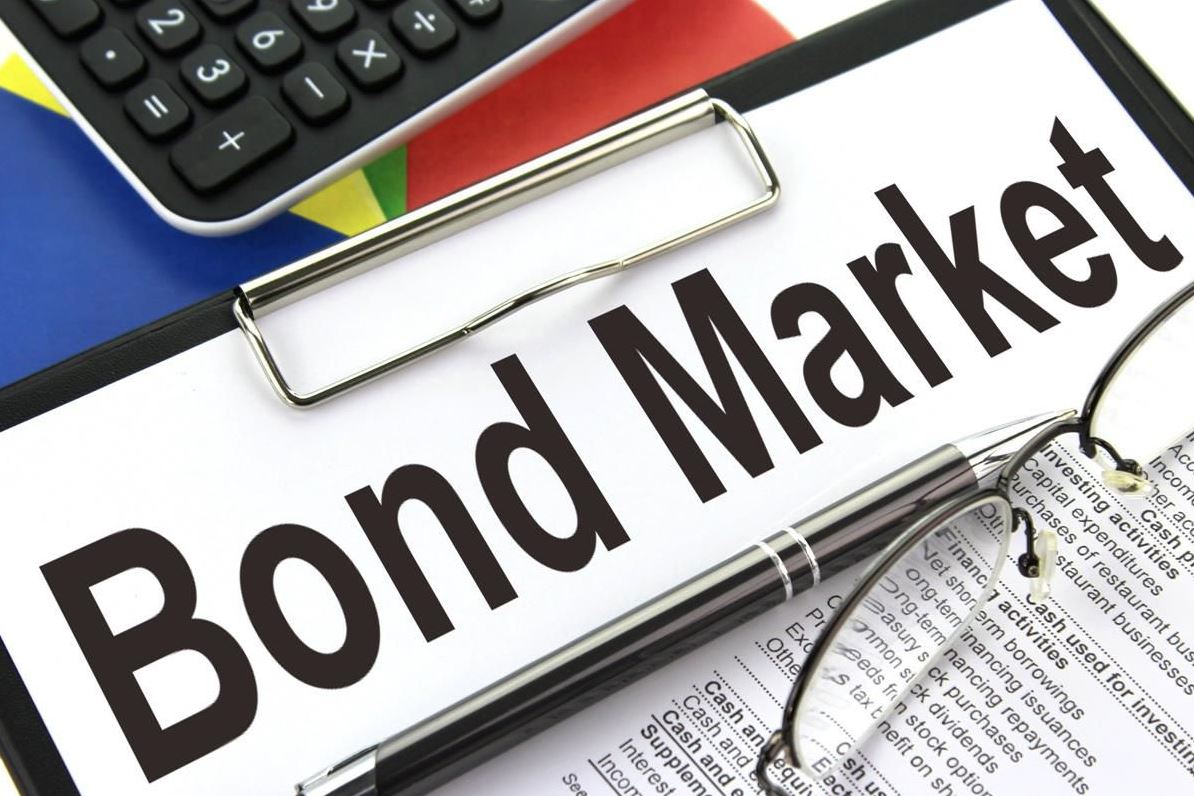
Bonds Compose the Rhythm of Global Finance and Shape the Pulse of Economic Confidence
The Origins of Debt as a Promise and a System
Every bond begins as a story of trust. Long before modern markets existed, rulers, merchants, and city-states borrowed resources in exchange for written promises to repay. These early instruments were not mere debts but symbols of credibility. From Venetian sea traders to the monarchs of Europe, bonds represented the intersection of ambition and reliability. As civilizations grew, these simple contracts evolved into a structured market that allowed governments and corporations to fund innovation, infrastructure, and war. In the process, the bond market became the silent partner of progress, financing revolutions, rebuilding nations, and shaping economic order across centuries. What began as personal trust between lender and borrower matured into a global network of credit that transcends geography and ideology.
Modern bond markets are the backbone of global finance. They determine the cost of money, influence stock valuations, and serve as the primary tool for governments to control liquidity. Each bond carries within it a dual promise: one financial, one psychological. The financial promise ensures periodic payments and ultimate repayment of principal. The psychological promise assures investors that stability exists in a world of constant motion. Together, these promises uphold confidence, the most valuable currency in any economy.
The Mechanics of Value and the Architecture of Yield
To understand bonds is to understand the architecture of value itself. A bond is a loan dressed in precision, defined by maturity, coupon rate, and issuer quality. Its price fluctuates inversely with interest rates, reflecting the continuous negotiation between past agreements and present expectations. When rates rise, existing bonds decline in value because new ones offer better terms. When rates fall, older bonds become treasures of higher yield. This dance between price and yield creates the rhythm of fixed-income investing, where every move of a central bank echoes through portfolios worldwide.
Yield, often mistaken as mere return, is in fact a compass of perception. It tells the story of risk, reward, and collective sentiment. The yield curve, plotting interest rates across maturities, becomes an economic seismograph, revealing tremors of optimism or anxiety. A steep curve signals expansion, while an inverted one warns of contraction. Investors and policymakers alike read these lines not as numbers but as narratives, interpreting how faith and fear circulate through the veins of global commerce.
The Role of Bonds in Economic Stability
While equities capture headlines, bonds maintain the equilibrium of economies. Governments use them to fund essential services, corporations issue them to expand operations, and institutions hold them to preserve liquidity. During crises, bonds act as both refuge and regulator. When markets panic, capital flows into government securities, seeking safety in their certainty. This behavior stabilizes the financial ecosystem by providing balance when risk assets falter. Bonds are, in many ways, the social contract of capitalism, an acknowledgment that even in uncertainty, obligations must be honored.
Central banks also rely on bonds as levers of policy. Through open market operations, they buy or sell government securities to control interest rates and money supply. These interventions shape borrowing costs for households and corporations, influencing everything from mortgage rates to business investment. In this way, bonds serve as both instrument and indicator of economic health. Their performance reveals the interplay between fiscal prudence, monetary ambition, and investor psychology. The quiet stability of bond markets often conceals the complexity of the forces that sustain them.
The Spectrum of Bonds and the Ecosystem of Credit
The bond universe stretches across a vast landscape of issuers and maturities. Government bonds anchor the system with perceived safety, offering yields that form the benchmark for all other securities. Corporate bonds, by contrast, trade higher return for higher risk, reflecting the financial health of the companies behind them. Municipal bonds finance local development, while sovereign debt connects investors to the destinies of nations. Each category contributes to a layered ecosystem where capital flows toward the entities most capable of turning it into productivity.
Credit ratings act as the genetic code of this ecosystem. Agencies assess each issuer’s capacity to meet obligations, assigning grades that guide investor confidence. Yet these ratings, though influential, are not infallible. History has shown that misplaced optimism can turn trusted securities into sources of crisis. Diversification, therefore, remains the cornerstone of prudent bond investment. A balanced portfolio spans maturities, geographies, and credit qualities, mitigating the risk that any single promise might fail. In this diversity lies resilience, the defining trait of healthy credit markets.
The Globalization of Debt and the Flow of Capital
In the interconnected world of modern finance, the bond market serves as the bloodstream through which global capital circulates. Sovereign funds in Asia purchase U.S. Treasuries, pension systems in Europe buy emerging market debt, and corporations borrow across currencies to reduce cost. This interdependence unites economies while exposing them to shared vulnerabilities. When confidence weakens in one region, tremors ripple across continents. The 1998 Asian financial crisis and the 2008 global credit collapse both demonstrated how deeply intertwined the world’s debt structures have become.
Globalization has also democratized access to debt. Technology enables investors of every scale to participate in markets once reserved for institutions. Digital platforms facilitate instant trading, while exchange-traded funds bring liquidity to instruments that were once opaque. Yet this accessibility introduces complexity. Currency risk, geopolitical tension, and regulatory shifts can alter value overnight. Successful navigation of the global bond market therefore requires not only analysis but perspective, the ability to understand how political, environmental, and social forces influence financial instruments that seem purely numerical.
The Relationship Between Bonds and Inflation
Inflation, the quiet erosion of purchasing power, is both adversary and companion to bond investors. Fixed payments lose real value when prices rise, making inflation the natural enemy of long-term bonds. To counter this, markets develop adaptive instruments such as inflation-indexed securities that adjust payouts in line with consumer prices. These innovations illustrate how the bond market evolves to preserve equilibrium. Inflation also plays a critical role in shaping interest rate policy, compelling central banks to adjust yields in response to changing economic realities.
Investors track inflation expectations as closely as actual data, for anticipation often moves markets faster than evidence. A sudden rise in yields may not reflect present inflation but future fear. This sensitivity transforms the bond market into an arena of psychology as much as economics. Understanding inflation is therefore not about numbers alone but about interpreting how societies perceive stability and scarcity. Bonds, in this sense, become instruments of collective foresight, translating sentiment into structure.
The Influence of Technology and Data on Fixed-Income Strategy
Technology has reshaped the bond market’s structure and speed. Trading once dominated by phone calls and paper tickets now occurs through algorithmic systems capable of executing thousands of transactions per second. Artificial intelligence analyzes vast datasets to identify pricing inefficiencies and forecast interest rate movements. Machine learning models interpret macroeconomic signals, transforming what was once intuition into quantifiable pattern recognition. These advances improve efficiency but also alter the market’s emotional rhythm, replacing human hesitation with automated precision.
Transparency, once a weakness of the bond market, has improved through digital platforms that aggregate real-time pricing. Yet technology introduces its own risks. The compression of reaction time can amplify volatility when algorithms respond simultaneously to the same triggers. Human oversight remains essential. Successful investors blend data analytics with qualitative insight, combining machine precision with human context. In the digital age, mastery of bonds requires both technical literacy and philosophical patience, for information alone does not create wisdom.
The Behavioral Dynamics of Fear and Trust
The bond market, though rational in design, is emotional in behavior. Fear of default, confidence in government stability, and faith in monetary leadership all shape yield movements. During crises, investors retreat into safe assets, driving yields down as demand surges. When optimism returns, capital migrates back to equities, pushing yields upward. This ebb and flow reflects collective psychology, not just financial calculus. Each trade carries sentiment embedded within spreadsheets, transforming abstract numbers into expressions of belief.
Trust is the invisible foundation of all debt instruments. Without confidence that borrowers will honor obligations, markets collapse. This is why sovereign credibility and institutional integrity remain priceless assets. Transparency in fiscal policy, consistency in governance, and clarity in communication sustain trust across generations of investors. Fear and trust coexist as the twin forces that animate the bond market. One pulls value downward in panic, the other lifts it upward in recovery. Together, they maintain the rhythm that makes fixed-income investing both predictable and profoundly human.
The Horizon of Debt and the Future of Yield
The bond market will continue to evolve as economies confront demographic shifts, environmental transformation, and digital disruption. Governments will issue green bonds to finance sustainability, corporations will experiment with tokenized debt, and investors will demand transparency rooted in social responsibility. Yet beneath innovation, the essence remains unchanged. A bond is still a promise, an agreement between present need and future faith. As interest rates cycle, as currencies fluctuate, the human desire for certainty persists. Bonds embody that desire, offering order amid volatility and continuity amid change. The horizon of debt stretches endlessly forward, shaped by the same principle that began it: trust written into time, paid in confidence, and measured in yield.