
The Weight of Value Beneath Global Trade
The Pulse of Physical Trade Shapes Invisible Financial Worlds
The Hidden Foundations of Global Exchange
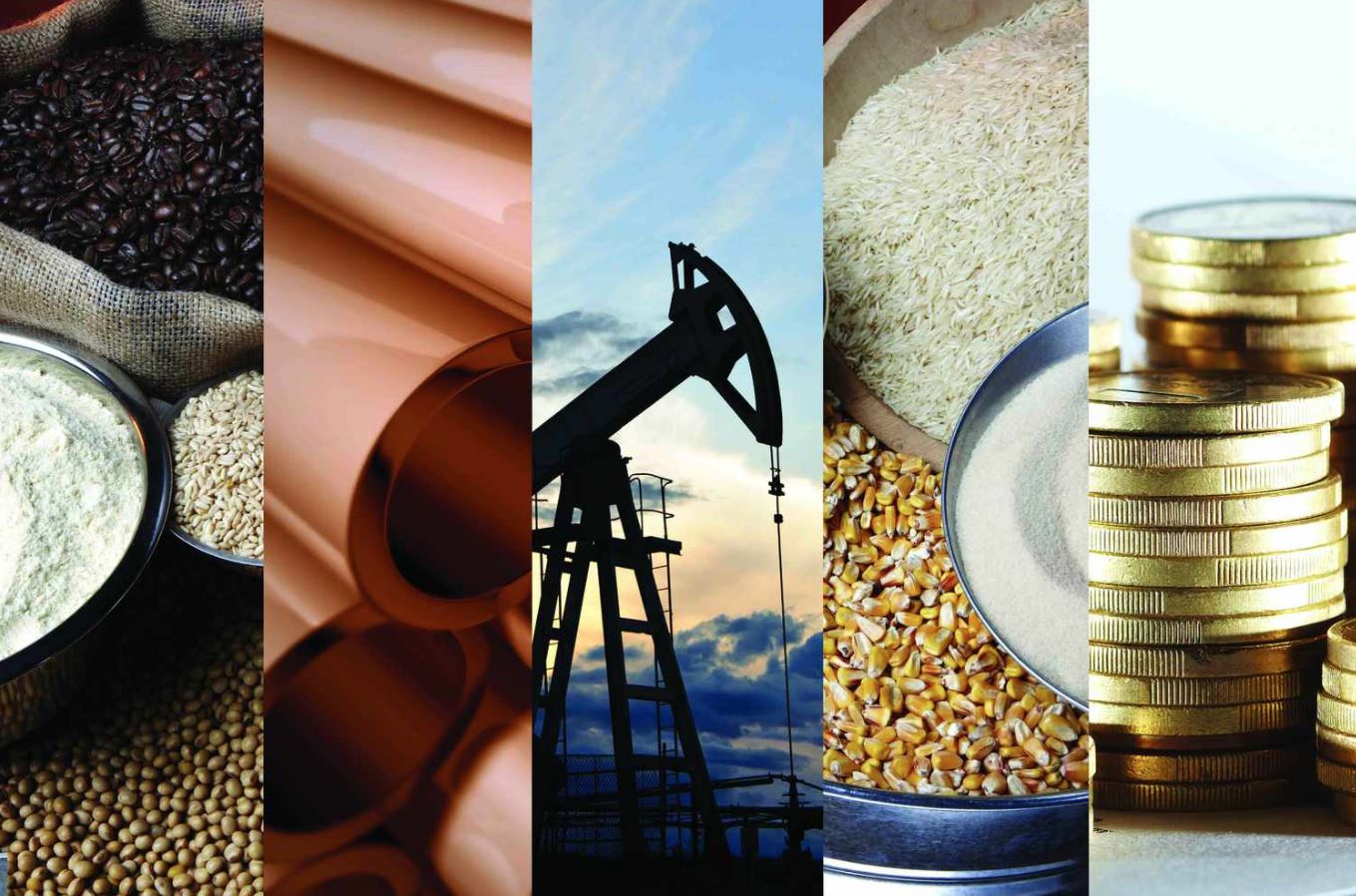
Every modern economy rests quietly on the constant motion of tangible goods. Wheat, copper, oil, gold, and countless other materials pass through invisible corridors of commerce each day, connecting continents in a network older than modern finance itself. Commodities trading is the bloodstream of civilization, circulating value through the veins of industry and agriculture. Without it, factories stall, cities darken, and currencies lose context. The true sophistication of this system lies not in its complexity but in its balance. Supply and demand operate like opposing tides, rising and falling in patterns shaped by weather, politics, and technology. To understand commodities is to read the underlying rhythm of existence that sustains the visible economy.
In a world where information flows faster than ships or pipelines, the relationship between physical supply and speculative capital has become both intricate and fragile. Traders act as interpreters of uncertainty, translating forecasts of rainfall, war, and consumer trends into prices that ripple through every market. The global economy, for all its digital sheen, still depends on barrels, bushels, and tons. When the trade of matter halts, even briefly, the illusion of infinite liquidity dissolves. The foundational truth remains: without commodities, wealth cannot breathe.
The Evolution from Barter to Algorithms
The story of commodities begins in the simplest act of exchange. Early civilizations traded grain for metal, hides for salt, and water rights for spices. Over centuries, this barter matured into organized markets where standardized contracts replaced personal negotiation. The invention of futures trading in the seventeenth century revolutionized commerce by allowing risk to be shared among strangers. Farmers could secure prices before harvest, and merchants could plan inventories with confidence. Each innovation expanded the distance between producer and consumer while deepening the trust in a universal system of value.
In the digital era, commodities trading has transcended geography. Algorithms now negotiate thousands of contracts per second, and data feeds from satellites monitor crop health, refinery output, and shipping routes in real time. The ancient instinct to trade has merged with artificial intelligence, creating an arena where emotion and computation coexist. Yet technology does not replace intuition. Veteran traders know that markets often move less on logic than on sentiment. Human perception still anchors every transaction. The evolution of commodities trading is thus a dialogue between memory and prediction, between the weight of matter and the lightness of information.
The Psychology of Price Discovery
Price, in commodities, is never a simple number. It is a mirror reflecting the sum of fear, expectation, and opportunity across millions of participants. A drought in Argentina can raise bread prices in Cairo. A geopolitical standoff in the Gulf can alter heating bills in Europe. The psychology of commodities markets operates on anticipation. Traders speculate not on what has happened but on what might occur. Every rumor, policy, or natural event becomes a thread in a vast web of emotional reaction. This is why volatility is not an anomaly but a constant companion to these markets. Prices move not only because of scarcity or surplus but because of interpretation.
Seasoned investors learn to navigate these waves by developing emotional discipline. They study cycles and sentiment, recognizing that panic and euphoria are as measurable as rainfall. Price discovery, when seen through this lens, is less about mathematics and more about collective behavior. The crowd drives momentum, yet within that crowd lie patterns that repeat through centuries. To master commodities is to master patience, humility, and timing. Those who chase trends often lose sight of fundamentals, while those who understand emotion as part of valuation gain clarity where others see chaos.
The Architecture of Supply Chains
Behind every commodity price stands an intricate web of logistics. Raw materials do not simply move; they traverse systems of storage, shipping, and transformation that define modern civilization. Crude oil must flow through pipelines or tanker fleets. Coffee must pass through processing mills and customs before reaching consumers. Copper mined in Peru might travel through several ports before shaping the circuitry in a smartphone. This architecture of movement determines both cost and vulnerability. Disruptions anywhere along the chain echo across markets with mathematical precision. When a canal clogs or a border closes, contracts tremble from Singapore to Chicago.
Efficiency has long been the goal of these networks, yet efficiency can breed fragility. The pursuit of just-in-time delivery, while profitable, leaves little margin for error. Recent global crises have forced traders and governments alike to reconsider redundancy and regional sourcing. The new paradigm emphasizes resilience over perfection. Storage capacity, diversified suppliers, and flexible logistics are becoming strategic assets rather than burdens. Commodities trading no longer concerns only price speculation but also the stability of the arteries that deliver the world’s essential goods.
The Geopolitical Weight of Resources
Commodities have shaped empires, drawn borders, and ignited wars. Control over oil fields, rare earth metals, or fertile soil often translates directly into geopolitical influence. In the twenty-first century, the contest for resources remains fierce, though its battleground has shifted from conquest to contract. Nations wield commodities as tools of diplomacy or instruments of leverage. Energy exports secure alliances, while sanctions on essential materials act as modern blockades. The flow of matter defines power as surely as military strength once did.
Investors who ignore geopolitics do so at their peril. Policy decisions in one capital can reprice entire markets within hours. The alignment between political stability and resource access determines which nations ascend or falter. Yet the narrative is not purely adversarial. Cooperation through shared energy grids, climate agreements, and regional trade compacts reveals that mutual dependency can also foster peace. The geopolitics of commodities is a study in paradox. Competition and collaboration coexist because neither can fully exist without the other. Every barrel and bushel carries the fingerprints of diplomacy as much as those of commerce.
The Green Transition and the Repricing of the Physical World
The movement toward renewable energy has transformed the meaning of commodities. Where once oil and coal symbolized power, lithium, nickel, and cobalt now define progress. The materials of the green transition are not limitless, and their extraction poses new environmental and ethical questions. As economies pivot toward sustainability, demand for cleaner resources creates a fresh hierarchy of value. The new commodity frontier is measured not only in profit but in planetary cost. Investors must navigate regulations, innovation, and conscience simultaneously.
This transformation extends beyond energy to agriculture and manufacturing. Climate-conscious consumers influence what gets grown and produced. Carbon credits, biodiversity preservation, and circular supply models are now part of commodity strategy. The value chain has expanded to include environmental stewardship as an asset class. Traders once focused solely on quantity must now account for quality, traceability, and impact. The green transition is redefining what constitutes wealth, aligning it with endurance rather than exploitation.
The Role of Technology in Predictive Analysis
Technology has become the silent partner of every successful commodities trader. Artificial intelligence aggregates weather forecasts, shipping data, and production metrics to predict market behavior with remarkable precision. Satellite imagery monitors crop development across continents, while blockchain verification enhances transparency in transactions. The rise of predictive modeling has given investors unprecedented insight into future trends. Yet even as algorithms gain accuracy, uncertainty persists. Data can illuminate probabilities but cannot capture human response. The greatest traders use technology not as a replacement for instinct but as its amplifier.
Machine learning systems increasingly detect anomalies that precede major market shifts. A subtle change in soil moisture, a slight alteration in shipping times, or a pattern of refinery maintenance can trigger alerts long before prices move. The fusion of human interpretation and artificial perception marks a new epoch in market analysis. Information has become both the commodity and the currency. Those who harness it responsibly gain foresight; those who misuse it invite distortion. In this balance between precision and unpredictability lies the true art of modern trading.
The Ethics of Speculation and the Human Cost of Price
Commodities trading often occupies a moral gray zone. Critics argue that speculative activity inflates prices and destabilizes food or energy access for vulnerable populations. Advocates counter that liquidity and risk-sharing make markets more efficient, ensuring producers and consumers alike find fair value. Both perspectives hold truth. The challenge lies in reconciling profit with responsibility. Ethical trading frameworks are emerging that prioritize transparency, sustainability, and equitable distribution. Exchanges and regulators now require disclosures that trace not just origin but also social impact. Investors increasingly view integrity as a competitive advantage rather than a constraint.
Understanding the human cost of price extends beyond philanthropy. It shapes long-term stability. Markets that disregard the social consequences of speculation often face backlash through regulation or consumer revolt. Awareness of this interdependence transforms trading from a zero-sum contest into a shared ecosystem. When speculation aligns with stewardship, both profit and purpose endure. The moral dimension of commodities trading is not an accessory to economics but an integral measure of its legitimacy.
The Education of a Modern Trader
The path to mastery in commodities trading is neither swift nor uniform. It requires a deep comprehension of global economics, behavioral psychology, and the subtle art of timing. Modern traders must balance quantitative analysis with intuition developed through observation. They study supply chain mechanics, political events, and natural cycles with equal curiosity. The discipline of patience remains their greatest asset. While machines process terabytes of information, the human mind interprets nuance and meaning. Success arises not from constant activity but from clarity of decision.
Education in this field now extends far beyond trading floors. Universities, online platforms, and mentorship networks provide access to knowledge once guarded by institutions. Yet true expertise comes through exposure to loss and recovery. Each miscalculation teaches resilience, and each triumph demands humility. The modern trader is both scientist and philosopher, interpreting the material and emotional currents that define human exchange. Mastery is less about prediction than adaptation, less about control than comprehension. In this pursuit, learning never concludes; it merely deepens.
The Future Beneath the Surface of Trade
The horizon of commodities trading stretches far beyond the immediate market cycle. As populations expand, technologies evolve, and environmental realities sharpen, the trade of physical goods will continue to anchor civilization. Digital currencies may reshape transactions, yet no blockchain can replace food, energy, or raw material. The physical world remains the final reference point of value. The traders who thrive in the coming decades will not be those who chase volatility but those who interpret transformation. They will recognize that every price, every contract, and every shipment tells a story about humanity’s relationship with nature and necessity. Beneath the surface of trade lies an unbroken connection between matter and meaning, and in that connection, the future continues to unfold.