

Where Hope Becomes the Currency of Recovery
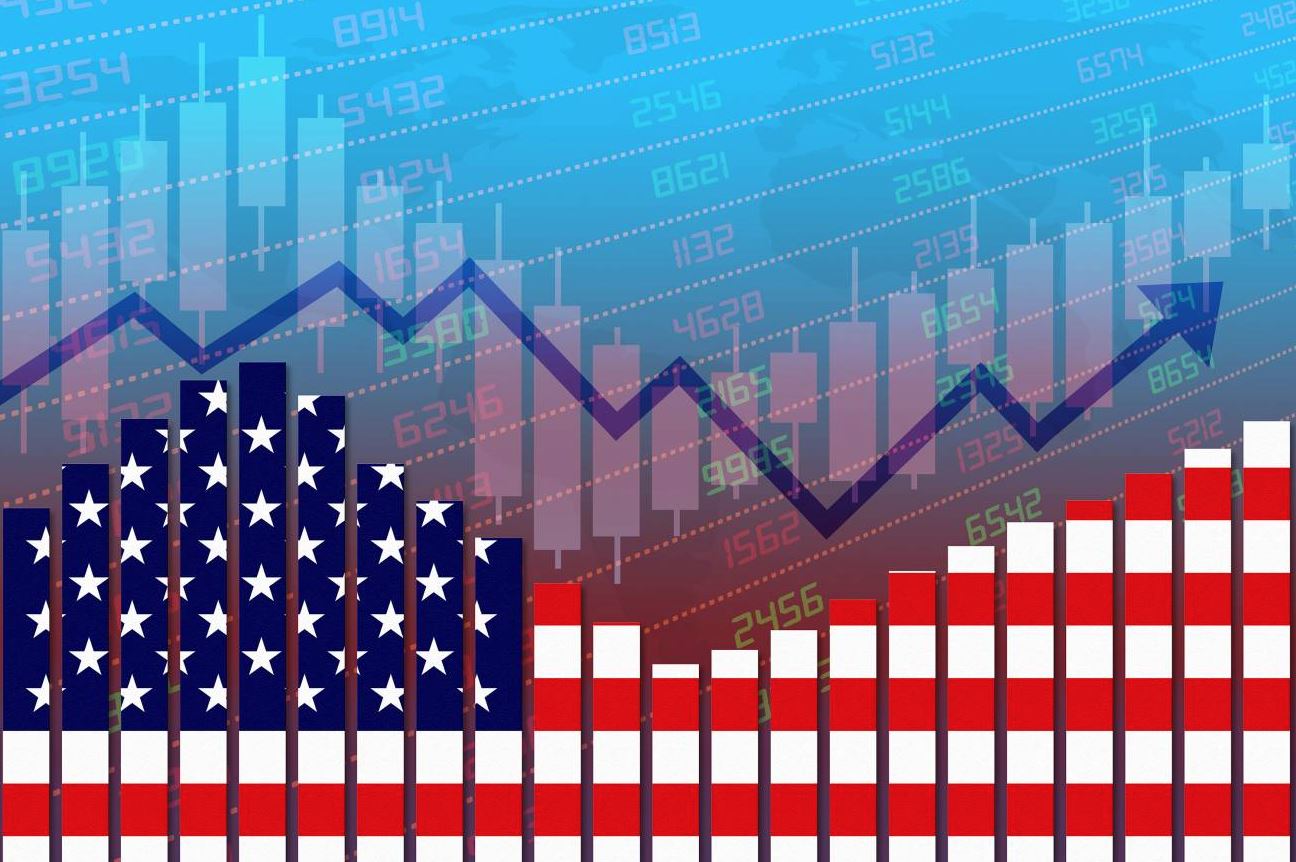
Economies Heal, Relearn, and Redefine Growth in a World That Refuses Stillness
The Anatomy of a Downturn and the First Signs of Revival
Every economic collapse tells a story of excess, imbalance, and reaction. Whether triggered by financial speculation, pandemic paralysis, or geopolitical shock, downturns expose the fragile threads that tie consumption, production, and confidence together. Yet within every contraction lies the seed of recovery. As demand contracts, inefficiencies are purged, innovations surface, and the cycle of reinvention begins. The anatomy of a downturn is not purely destructive, it is regenerative. The market resets expectations, recalibrates prices, and forces governments and businesses to reconsider the foundations of their growth models. Economic recovery, therefore, begins long before the statistics confirm it. It starts in sentiment, in the quiet rebuilding of trust and optimism.
Economists often identify early indicators of revival through patterns that seem almost imperceptible: rising factory orders, stabilized employment, and returning consumer confidence. Behind these metrics lies human psychology, the willingness to believe once more in progress. Recovery is as much emotional as it is structural. It requires courage to invest when fear still lingers and patience to rebuild when the scars of crisis remain visible. The first signs of revival are not explosions of activity but faint murmurs of resilience echoing through every transaction, contract, and conversation.
The Role of Policy in the Art of Renewal
No recovery unfolds without intervention. Governments act as both physician and architect, prescribing stimulus while reconstructing the institutional framework that supports stability. Fiscal policy injects liquidity into stagnant sectors, while monetary policy manipulates interest rates to restore motion in lending and investment. Central banks operate as guardians of momentum, ensuring that confidence flows as freely as credit. Yet policy is not a mechanical process, it is an act of judgment. Every stimulus carries risk, every tax reform a consequence. The art of renewal lies in the precision of balance: too much support breeds inflation, too little delays recovery.
Successful interventions share one trait: adaptability. The modern economy is not static; it is an ecosystem that evolves faster than any blueprint can predict. Policy must therefore operate as a living organism, responsive to data and attuned to sentiment. Transparency in communication amplifies effectiveness. When citizens understand not only the measures enacted but the rationale behind them, faith replaces uncertainty. The partnership between governance and public trust becomes the most potent form of stimulus. Through this synergy, policy transforms from legislation into lifeline.
The Private Sector’s Path from Survival to Innovation
While governments stabilize, businesses rejuvenate. Recovery at the enterprise level begins with adaptation. Companies that endure crises are those that transform rather than wait for conditions to improve. They innovate under pressure, discovering efficiencies born from constraint. A manufacturer automates to reduce costs. A retailer embraces digital infrastructure to reach consumers locked indoors. A service firm redefines its product to align with emerging needs. This evolution is not accidental; it is the result of necessity catalyzing creativity. Economic recovery depends not on returning to the old normal but on building a new one better suited to changed realities.
The private sector also plays a psychological role. Its optimism becomes contagious. When firms hire, consumers spend. When innovation returns, investors follow. The circularity of confidence transforms isolated resilience into collective progress. Crises separate complacency from creativity, filtering out business models dependent on fragility and rewarding those grounded in agility. By the time growth metrics rise, the underlying transformation has already taken root. Recovery, in this sense, is less about rebound and more about reinvention, a process that reshapes industries from within rather than restoring them to prior form.
The Human Factor in Economic Healing
Every statistic of recovery conceals a human story. Employment numbers represent lives reoriented toward stability. Consumption reflects regained courage to dream beyond subsistence. Economic healing occurs not in boardrooms but in households, where the decisions to spend, save, or risk define the broader trajectory of growth. The workforce becomes both beneficiary and engine of recovery. Retraining programs, educational reform, and labor flexibility ensure that individuals displaced by crisis find relevance in new sectors. Without this inclusion, macroeconomic revival remains superficial, a rebound of capital without a return of dignity.
Moreover, emotional recovery parallels financial recovery. Uncertainty erodes motivation, while opportunity restores it. Societies that prioritize well-being alongside productivity foster deeper, more sustainable renewal. Social safety nets, mental health initiatives, and fair labor policies transform vulnerability into resilience. When people trust that the system values them as contributors rather than costs, they engage with renewed commitment. The human factor, though difficult to quantify, determines the endurance of every recovery. It reminds us that economies are not machines but reflections of collective behavior and shared belief.
The Interplay Between Technology and Transformation
Technology accelerates recovery by reshaping the conditions of productivity. Crises often compress decades of innovation into a few years. The global financial turmoil of past decades propelled fintech; the recent health crisis catalyzed digital collaboration and automation. In each case, necessity redefined feasibility. Startups emerged where institutions hesitated, and digital infrastructure became the nervous system of economic resilience. As data replaces speculation and automation supplements labor, economies transition from dependence on scale to dependence on speed. The winners of modern recovery are those who digitize adaptation, not just digitize operation.
However, technological acceleration introduces new disparities. Regions and industries that fail to integrate innovation risk permanent exclusion from the growth narrative. Bridging the digital divide becomes a form of fiscal policy in itself, ensuring that progress remains inclusive. Education systems must evolve alongside markets, teaching not only technical literacy but adaptive thinking. In the age of technology-driven recovery, the line between human capability and machine efficiency grows thinner. The challenge is not to compete with technology but to coexist creatively within it.
The Environmental Dimension of Rebuilding
Modern recovery no longer measures success solely by GDP growth. Sustainability has entered the calculus of prosperity. Post-crisis reconstruction offers a rare chance to align economic ambition with ecological responsibility. Green infrastructure projects, renewable energy investment, and circular manufacturing models merge environmental ethics with fiscal logic. These initiatives generate employment while reducing long-term vulnerability to resource scarcity and climate volatility. The path toward sustainability is not a luxury of stable economies; it is the foundation of lasting recovery.
Environmental resilience also reframes how we define stability. Short-term growth achieved through exploitation creates long-term fragility. Recovery that ignores ecological cost only postpones future collapse. By embedding environmental objectives into fiscal strategy, nations convert repair into regeneration. The future economy will reward those who understand that prosperity cannot exist without preservation. True recovery is measured not by how quickly we return to consumption but by how responsibly we rebuild the capacity to sustain it.
The Global Interdependence of Revival
In a connected world, no economy recovers alone. Supply chains, investment flows, and migration patterns intertwine destinies across continents. A surge in one region stimulates exports in another, while instability in one market can undermine confidence everywhere. International institutions such as the IMF and World Bank coordinate recovery efforts through lending, technical assistance, and policy alignment. Yet beyond institutions, global recovery depends on cooperation between nations that often compete economically but share existential risks. Pandemics, energy crises, and climate change do not respect borders. Solidarity becomes both ethical choice and economic necessity.
Currency markets and trade policies also shape recovery trajectories. A depreciating currency can boost exports but increase import costs, while protectionism may shield domestic industry at the expense of global balance. Diplomacy becomes fiscal strategy, and multilateralism becomes insurance against volatility. In every cycle of decline and recovery, history reveals a pattern: nations that collaborate recover faster than those that isolate. The architecture of future stability will be built not by walls of sovereignty but by bridges of shared interest.
The Cultural and Moral Reconstruction of Prosperity
Economic recovery is not merely material. It reshapes values. After every crisis, societies confront questions of purpose and balance. Should growth prioritize efficiency or equity? Should wealth accumulation outweigh resilience? Recovery provides the moral pause that prosperity rarely allows. It exposes excesses, humbles assumptions, and invites reflection. Cultural narratives evolve alongside policy. Consumers adopt minimalism, businesses embrace transparency, and governments rediscover accountability. This transformation infuses economic metrics with meaning, redefining what success truly represents.
Art, literature, and public discourse often mirror this moral reconstruction. Creativity flourishes in periods of renewal, interpreting hardship as raw material for progress. Cultural adaptation becomes an invisible but vital component of recovery, fostering empathy where statistics fall short. Economies heal when their cultures rediscover integrity, generosity, and imagination. When recovery transcends numbers to restore collective purpose, it becomes not a return to normalcy but an evolution toward maturity.
The Horizon Beyond Recovery
Recovery is not the destination of an economic cycle but the continuation of it. Once equilibrium returns, new challenges emerge: managing inflation, ensuring inclusion, and preventing complacency. True resilience lies in building systems that anticipate shock rather than merely survive it. The horizon beyond recovery demands perpetual readiness, continuous innovation, and moral clarity. Economies that learn from crisis grow stronger not by avoiding risk but by cultivating adaptability. The pulse that returns after silence is not the same as before, it beats with greater wisdom, reminding the world that progress is not the absence of failure but the mastery of renewal.