

Threads That Bind the World’s Markets
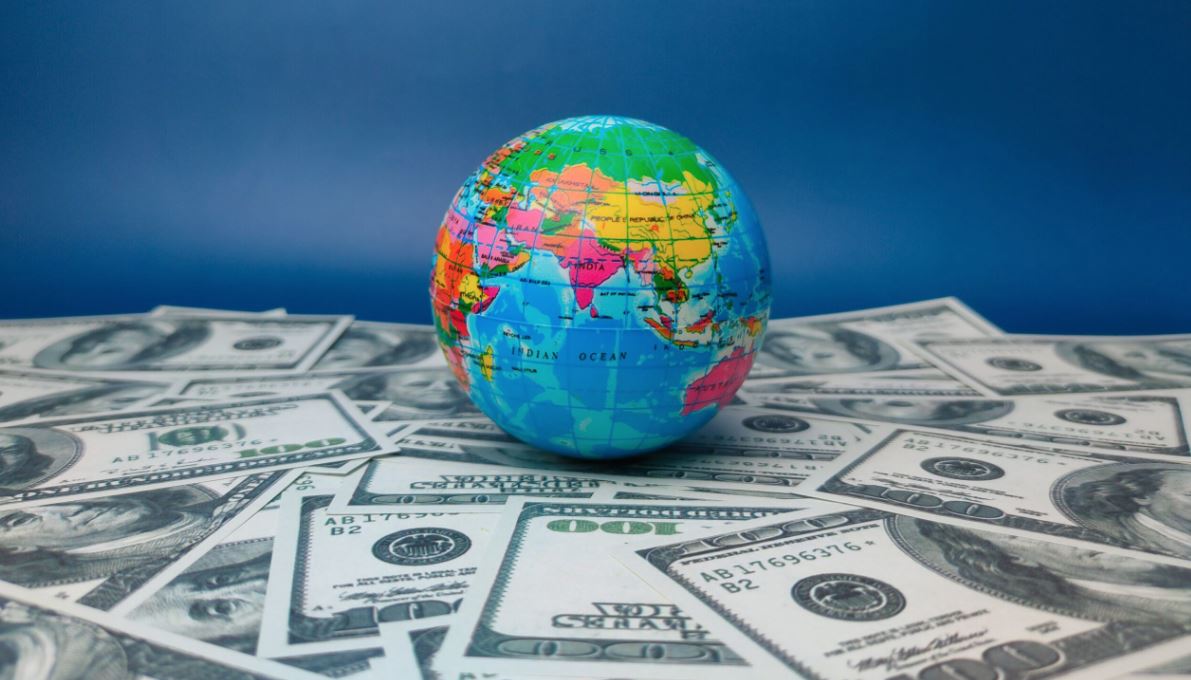
Tracing the intricate relationships that sustain and challenge global prosperity
The Web of Modern Interconnection
The global economy functions as a vast system of interdependence where technology, trade, and finance interlace nations into a shared destiny. Goods that begin as raw materials in one hemisphere often finish as products thousands of miles away. Digital platforms transmit capital and information in seconds, while supply chains stretch across borders that once represented separation. This deep interconnection creates efficiency but also vulnerability. A shipping delay, an energy shortage, or a policy shift can ripple through every region. Economies that used to rely on domestic consumption now depend on distant partners for growth, while investors analyze global sentiment as closely as they analyze local fundamentals. The structure of modern interconnection has turned economics into a living network rather than a linear equation. Each nation acts as both participant and observer, influencing outcomes through policy, innovation, and trust. Understanding this web means recognizing that prosperity today depends as much on coordination as competition. The health of one link can determine the strength of the entire chain, and global cooperation often defines whether resilience outweighs fragility.
Trade Winds and Shifting Currents
Trade once revolved around natural advantage, yet in the twenty first century, strategy and technology have redefined what nations exchange. Services now travel as fluidly as goods, and intellectual property has become as valuable as tangible exports. Tariffs, logistics, and digital regulations shape flows that affect employment and investment everywhere. When trade patterns shift, currencies move, and entire industries reconfigure supply networks to adapt. The evolution of regional blocs such as the European Union and trade partnerships in Asia illustrates the drive toward shared frameworks that reduce friction. However, trade also reveals the delicate balance between openness and protection. Countries must decide how much autonomy they can sacrifice for efficiency and how much cooperation they can risk for sovereignty. Recent years have highlighted how global shocks test this balance. Supply disruptions during crises forced governments to reassess reliance on distant production. The new phase of trade prioritizes flexibility and redundancy rather than just cost reduction. The world’s trading currents continue to adjust as nations seek security without surrendering growth.
Capital Flows and the Search for Yield
Money crosses borders even faster than goods, responding instantly to changes in rates, inflation, and sentiment. Global investors chase yield where it appears, moving capital toward growth markets or safer havens as conditions evolve. This constant motion amplifies both opportunity and risk. A surge of inflows can finance expansion but also create bubbles, while sudden outflows can weaken currencies and strain fiscal systems. Central banks coordinate indirectly through policy signals that influence global liquidity. The movement of capital has made national economies more exposed to collective moods. Emerging markets benefit from open access to funding but remain vulnerable when external rates rise or commodity prices fall. Financial technology adds another dimension by democratizing access to markets that once required institutional scale. As more participants trade globally, the feedback loops between policy, sentiment, and price strengthen. To manage volatility, economies build reserves, develop local debt markets, and pursue transparency to earn trust. Capital flows, when stable, accelerate development. When erratic, they test the resilience of even the most sophisticated financial systems.
The Role of Innovation in Global Growth
Innovation serves as the oxygen of global expansion, powering productivity and reshaping industries. The digital revolution reduced barriers between knowledge and implementation, allowing ideas to scale quickly across borders. Nations that invest in research, infrastructure, and education capture more of this energy, turning creativity into economic momentum. Yet innovation does not spread evenly. Some regions experience rapid transformation while others struggle to integrate new technologies due to limited capital or governance constraints. Global growth increasingly depends on how efficiently technology diffuses rather than how fast it evolves. Artificial intelligence, automation, and renewable energy illustrate this pattern. The countries that lead these fields attract both talent and investment, creating new hierarchies in global influence. Collaboration between universities, startups, and public institutions fosters innovation ecosystems that sustain long term competitiveness. However, the challenge lies in ensuring inclusion. Without equitable access, the innovation gap deepens inequality across nations. Bridging that divide will define whether technology becomes a shared catalyst or another wall dividing developed and developing economies.
Demographics and the Shifting Balance of Labor
Population dynamics shape the trajectory of economic power. Nations with young, expanding workforces hold natural potential for growth, while those with aging populations face the challenge of sustaining productivity with fewer hands. The global economy reflects these differences vividly. In regions like Africa and South Asia, labor abundance fuels optimism about future output, provided education and infrastructure catch up. Meanwhile, developed economies in Europe and East Asia navigate shrinking labor pools that pressure pension systems and productivity. Migration emerges as both solution and controversy, offering relief to aging economies but stirring social tension. Automation mitigates demographic constraints by replacing repetitive tasks with machines, yet it demands reskilling programs that many nations have yet to implement. The balance between population, productivity, and technology will decide how smoothly global labor transitions into the next century. For investors and policymakers alike, demographic awareness becomes essential. Age structures determine savings rates, consumption trends, and political priorities. In this context, demography remains destiny, but one that can be rewritten with foresight and adaptability.
Climate Economics and Environmental Accountability
The health of the global economy is inseparable from the health of the planet. Environmental stress has shifted from peripheral concern to central challenge, reshaping investment priorities and corporate strategies. Climate events disrupt supply chains, damage infrastructure, and alter migration patterns, while policies designed to reduce carbon emissions redefine competitiveness across sectors. Transitioning to a low carbon economy requires massive reallocation of capital toward renewable energy, sustainable agriculture, and efficient technology. The cost of inaction now exceeds the cost of adaptation, and markets increasingly price environmental risk into valuations. Carbon markets, green bonds, and sustainability indices represent attempts to merge ecology with finance, translating environmental goals into economic incentives. Yet progress depends on accountability. Without transparent standards, environmental claims lose credibility, and capital misallocates. The emerging discipline of climate economics studies how to balance growth with preservation, asking how societies can measure prosperity without exhausting the resources that sustain it. The global economy’s next phase will test whether human ingenuity can align profit with stewardship before the planet imposes its own adjustment.
Policy Coordination and Monetary Influence
Macroeconomic stability requires coordination among the institutions that steer global liquidity. Central banks influence far beyond their borders, and their choices ripple through currencies, commodities, and asset prices worldwide. When major economies adjust policy in opposite directions, capital reallocates unevenly, and volatility rises. The challenge lies in synchronizing without surrendering autonomy. The International Monetary Fund and other multilateral bodies attempt to mediate through dialogue and support mechanisms, yet national priorities often override collective wisdom. Exchange rate management, debt sustainability, and fiscal discipline all hinge on credible policy communication. In the era of instant markets, hesitation or ambiguity can move billions within minutes. For smaller economies, credibility acts as currency; for larger ones, restraint becomes a form of leadership. The lessons of past crises demonstrate that global recovery depends on cooperation that transcends borders and political cycles. The next frontier of monetary influence may involve digital currencies issued by central banks, instruments that could streamline cross border payments while challenging existing systems. How coordination evolves will decide whether the global economy experiences smoother transitions or renewed turbulence.
The Rise of Regional Power Centers
While globalization connects nations, regional integration reshapes competition. Clusters of economic influence form around geographic, cultural, or political ties that amplify local advantages. North America leverages technological leadership, Europe focuses on regulatory standards and innovation in sustainability, and Asia builds on manufacturing scale and digital transformation. These regional dynamics create parallel engines within the global machine. Trade within blocs grows faster than trade between them, suggesting that proximity and shared policy often outweigh distance. However, the rise of multiple power centers introduces strategic complexity. Competition for resources, technology, and influence can generate both collaboration and friction. For global investors, diversification across regions becomes crucial because growth drivers differ. One region’s energy transition may coincide with another’s commodity surge. As economies localize supply chains to reduce vulnerability, they also create new opportunities for nearshoring and partnership. The emerging architecture of regional power may eventually balance globalization with self sufficiency, offering a hybrid model where cooperation persists within layers of localized resilience.
The Human Factor in Global Resilience
Despite technology, data, and policy sophistication, people remain the decisive element in economic endurance. Trust sustains trade, creativity drives innovation, and empathy guides the policies that balance growth with fairness. The global economy is not an abstract mechanism but a human creation built on shared intention. Crises often reveal this truth when cooperation and compassion outperform competition. Investments in education, health, and civic institutions return dividends measured not only in output but in cohesion. A truly resilient world depends on citizens who understand interconnection and leaders who respect it. As boundaries blur, humanity’s collective capacity to collaborate defines the horizon of prosperity. The future of the global economy will not be written solely by algorithms or central banks but by the choices societies make about inclusion, responsibility, and imagination. In those choices lies the measure of progress, not merely in numbers but in the quality of life they represent.